


Understanding Trial Balance: The First Step to an Accurate Balance Sheet


If the totals do not match, errors in the recording process must be reviewed and corrected. This could be due to input mistakes, mathematical errors, or transactions that have been improperly classified. Each balance is recorded under the appropriate column—debit or credit—on the trial balance in the accounting worksheet, based on whether the account represents an asset, liability, or income. Last but not least, make sure that the total amount of debits corresponds to the total amount of credits, which reflects a good balance in the accounts. Thanks to this mirror-like dynamic, you can analyze your company’s financial and accounting situation in real time.
Examples of How Entries in the Trial Balance Affect the Balance Sheet
Although companies also prepare a cash flow statement for cash flow management purposes and financial reporting, line items in the cash flow statement aren’t included in the trial balance. After making any required adjustments and closing entries in the accounting records, the trial balance is run again as the Post-closing Trial Balance. Bookkeepers and accountants or small business owners use different types https://live25.ecodinghub.com/columbus-bookkeeping-and-business-services-llc-bbb/ of trial balance, depending on the stage of the accounting cycle close. Accounting software and ERP systems often generate trial balance reports.

Deriving Financial Statements from Trial Balance
If the trial balance did not “balance” it signaled an error somewhere between the journal and the trial balance. The purpose of an adjusted trial balance is to document correcting debit and credit entries that adjust accounts included in the original unadjusted trial balance. It ensures that every transaction recorded in your accounting system follows the double-entry rule, where each debit has an equal and corresponding credit. A journal and a ledger are maintained according to the double-entry concept of accounting. As the bookkeepers and accountants examine the report and find errors in the accounts, they record adjusting journal entries to correct what is a trial balance them. After these errors are corrected, the TB is considered an adjusted trial balance.
Step 1: Introduction

Angela is certified in Xero, QuickBooks, and FreeAgent accounting software. To simplify bookkeeping, she created lots of easy-to-use Excel bookkeeping templates. This trial balance example includes all the balance sheet items first, assets = liabilities + equity followed by the profit and loss account.
Checking for Accuracy and Completeness
As per the accounting cycle, preparing a trial balance is the next step after posting and balancing ledger accounts. It is a statement of debit and credit balances that are extracted on a specific date. When the trial balance is first printed, it is called the unadjusted trial balance. The adjusted trial balance is typically printed and stored in the year-end book, which is then archived.
As per the example above, the assets items are recorded at the top and then followed by liabilities, equity, revenues, and expenses. At the end of the period, the ledgers are closed and then move all of the closing balance items into trial balance. The accountant needs to enter the accounting transactions correctly into the system, and then the statements are ready for use. Trial balance is normally prepared in five columns but sometimes in four, and it is used to prepare an entity’s draft Financial Statements. It’s not every day that you will use a trial balance unless you are an auditor.
- In simpler terms, it shows how much of the company’s assets are truly owned by the shareholders.
- On the right-side of the report we show two columns, a column for debits and a column for credits.
- The unadjusted trial balance is a list of all the accounts and their balances before any adjustments are made.
- An error of omission happens when a transaction that should have been recorded is left out entirely.
- Furthermore, businesses have a legal obligation to provide accurate financial reports.
- A trial balance is a financial report that lists all account balances from your general ledger at a specific point in time.
After the preliminary Unadjusted Trial Balance, also known as the Trial Balance, is prepared, accountants review it and determine if corrections are required for determining adjusted balances. Since most companies have computerized accounting systems, they rarely manually create a TB or have to check for out-of-balance errors. It lists each account with its balance, the result of the difference between the credit and debit sides. It lists each account with its balance, the result of the difference between credit and debit. The trial balance groups together all a company’s accounts, following the order of the General Chart of Accounts (PCG), from class 1 to class 7.
Tips for Error Detection and Correction
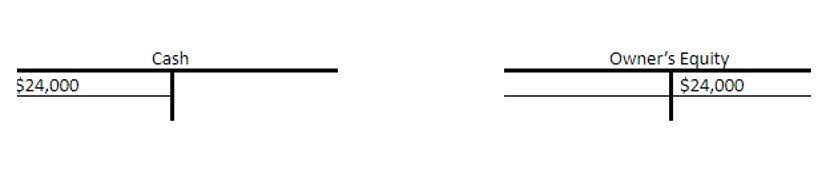
Since there are no other transactions affecting this account, the final balance remains at \$8,000, reflecting a credit balance, which is typical for liability accounts. Throughout various transactions, cash can be affected by debits (increases) and credits (decreases). For example, if a business receives \$50,000 from an owner, this is recorded as a debit in the cash account. Conversely, if the business pays \$40,000 for land, this transaction is recorded as a credit.